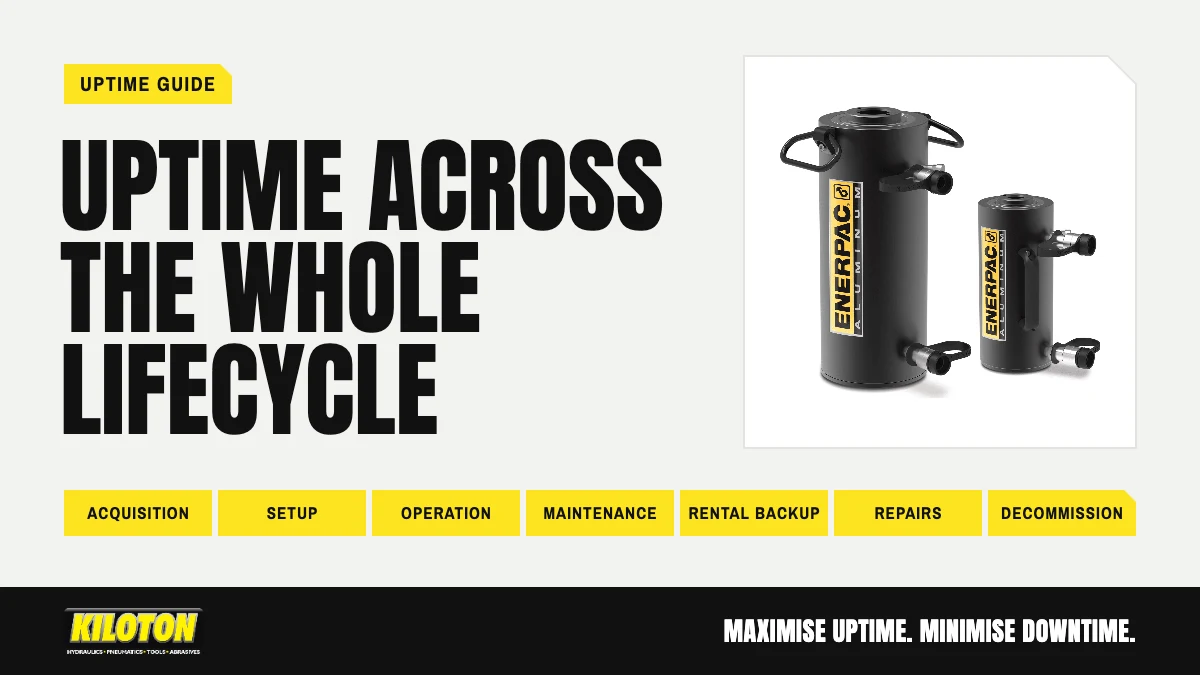
A hydraulic tool needs more than a place on the equipment list. It needs to suit the application, remain fit for service and be used by people who understand its operating requirements. For maintenance and engineering teams, protecting uptime means planning that support before an equipment problem interrupts the job.
What does hydraulic equipment lifecycle support cover?
Kiloton supports mining, manufacturing, construction and industrial operations through technical assessment, preventative maintenance, repairs, field support, rental backup and training. These services connect the purchase decision to the equipment’s working life, helping teams minimise downtime and manage the next maintenance decision with better information.
Start with the application and the critical assets
A support plan starts with knowing what the equipment must do and where its failure would disrupt work. Kiloton’s technical sales and site assessment service helps map hydraulic assets and identify critical equipment at risk of downtime.
For a useful assessment discussion, bring the asset list, application details, known faults and planned work schedule. Highlight the tools that have no suitable backup or that support a critical lift, bolting task or maintenance activity. This gives the technical team a practical starting point for discussing tool selection and the support each asset may need.
Plan maintenance around equipment condition
Waiting for a tool to fail leaves fewer options for arranging repairs and continuity. Kiloton’s preventative maintenance programme includes scheduled inspections, calibration, load tests and failure-mode detection. The appropriate scope depends on the equipment and its operating requirements.
Keep inspection findings and previous service reports linked to the asset. A recurring leak, a change in performance or a history of repairs gives the service team useful context.
Ask Kiloton to review these records with your equipment list and discuss the inspections, tests and maintenance actions relevant to your operation. Maintenance intervals should follow the applicable manufacturer requirements and an agreed technical assessment.
Use repair findings to inform the next decision
An equipment fault needs a clear diagnosis before the repair scope can be agreed. Kiloton Service Centre provides strip-and-report diagnostics, failure analysis and OEM-standard repairs, supported by testing and calibration capabilities.
When requesting an assessment, identify the tool and describe the symptoms, operating conditions and previous repair history. Discuss the proposed work and required documentation before proceeding. Root-cause findings can also help the maintenance team address recurring misuse, wear or application concerns rather than treating each failure as an isolated event.
Bring support to the application when needed
Some hydraulic equipment cannot readily be removed from site. Kiloton Field Support covers onsite assessment, repairs, testing and application guidance within the relevant service scope. Support can include tool selection, setup assistance and investigation of irregular tool behaviour.
For an urgent field support enquiry, call the 24/7 Rapid Response Line on +27 83 557 6768. Provide the site location, equipment details and a description of the problem so the team can discuss the support and arrangements you need. Attendance and work scope are confirmed for each requirement.
Include rental backup in the continuity discussion
A repair or a specialist job may create a temporary tooling requirement. Kiloton Rental Backup includes high-pressure hydraulic cylinders, pumps, bolting tools and accessories. Rental can be considered where owned tooling is unavailable or purchasing specialist equipment is not practical.
Discuss the application, required dates and tool specifications early. Confirm suitability and current availability with Kiloton, together with any selection, setup or user training support required. A continuity plan is more useful when the backup requirement has been defined before the tool is needed.
Connect operator knowledge with equipment care
Operators and maintenance teams play a direct role in how equipment is used and how changes in its condition are recognised. Kiloton Training covers hydraulic safety, product knowledge, operator development, and inspection and maintenance topics.
Training can address tool selection, correct setup, hose and connection checks, cleaning, storage and recognition of changes in tool behaviour. Choose the scope around the equipment people actually use and the responsibilities they hold. Operators, technicians, safety officers and supervisors may need different levels of guidance.
Keep records connected across the hydraulic equipment lifecycle
Kiloton Service Centre offers load testing, calibration and verification. Agree the relevant test scope and documentation requirements for the equipment being assessed. Retain the resulting reports with its inspection and repair history so future decisions have a clear record to draw on.
As the equipment moves through its lifecycle, use those records to discuss continued service, further assessment or replacement planning. Kiloton’s approach brings the tool, its application and its support requirements into one lifecycle conversation.
Discuss your hydraulic uptime support requirements
Send your equipment list, application details and maintenance priorities to sales@kiloton.co.za or call +27 86 170 7707, and ask Kiloton to help define the assessment, service, rental or training support for your operation. For urgent field support, call the 24/7 Rapid Response Line or find your nearest Kiloton branch.